Holidays and Safety Should Go Hand-in-Hand

Buying presents for the kids, traveling around town to see the holiday lights, flying to see Grandma and Grandpa, decorating the Christmas tree, lighting the menorah, shoveling the sidewalks…all things we do during the holiday season and all things that should make us think about how to be safe while doing it.

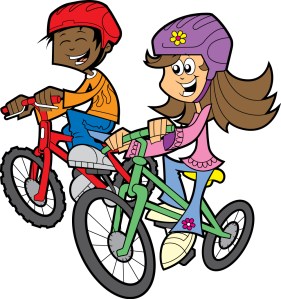
Are you giving a gift of a bicycle, skateboard, scooter, Ripstik???  If so, a helmet should definitely be included.  For younger kids just learning these skills you should also consider elbow and knee pads as gravity will win more often than not.  You should always supervise kids when they are learning a new skill…have you tried to ride a Ripstik?  It’s not easy and would require a trip to the emergency room for me!
Bike2kids

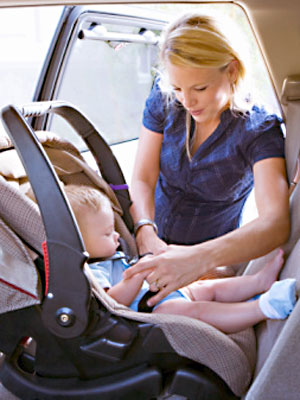
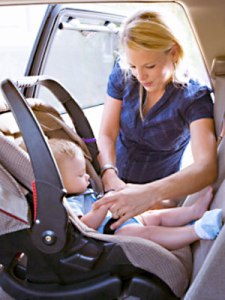
Anytime you are driving, even short distances, everyone should be properly buckled up.  Most crashes happen close to home, so “we’re not going far” is no excuse.  Parents and caregivers need to model good behavior as studies have shown that even if kids are buckled in a car seat in the back seat of the car, if the driver doesn’t buckle up, the kids won’t buckle up when they become drivers. With all the technological advances in cars and car seats over the last few years you would think you need a degree in engineering to install the car seat.  Don’t feel bad.  Ask for help.  There are over 38,000 certified child passenger safety technicians around the country to help you figure it all out.  Put multiple kids in one car and it becomes a giant puzzle to get everything to fit correctly.  Check http://sklarimer.org/car-seat-resources/ for a list of inspection stations in Larimer and Weld Counties.  Make sure to give yourself a week or so when calling to make an appointment.
wte_carseat_safety_02

If you’re flying off to warmer weather to visit family and friends, a car seat is a must.  You need it to get to the airport.  You know how to use your seat.  Don’t chance it on the other end with a rental seat that you’re not sure is clean or safe or borrowing a family member’s seat you are not familiar with.  Take your own.  The FAA recommends all children ride in an appropriate restraint on an airplane because you never know when you’ll encounter turbulence.  But, we know money is a factor.  Children under the age of 2 can ride on the lap of a parent/caregiver.  Have the car seat gate-checked…NEVER check it with your luggage.  Have you seen them handle the luggage!?!?  Yikes!  Also be aware of the child passenger safety laws in the different states.  Many states are now enacting a rear-facing until the age of 2 law.  Booster seat laws also vary among states.

car seat on airplane

Decorating Christmas trees, lighting the menorah, putting out poinsettias all pose safety risks for kids.  Decorate with the children in mind…get on their level and see what is interesting to them.  Put ornaments up higher on the tree…sure the bottom half of the tree might be naked, but kids won’t try to eat the ornaments or break something valuable.  Don’t use table cloths as they are a way for children to try to climb the table.  Don’t leave candles unattended. Have you heard the saying “a moth to a flame”…same goes for kids.  Some holiday plants are poisonous, like poinsettias, so if you’re going to have them in your home, put them up out of reach.  Mistletoe is also poisonous to kids and pets.

christmas tree                                                                               menorah                                                             poinsettia

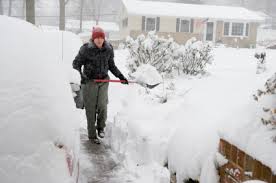
Shoveling is strenuous on the body.  Take frequent breaks, dress for the weather, hydrate, and share the joy with your neighbor kids by hiring them to do it.  North-facing houses are especially difficult because they do not get the sunlight to help the snow and ice evaporate.  Stay on top of the shoveling and watch for ice build up.  Use ice melt that won’t destroy your sidewalks and driveway.

shoveling

Have fun, stay safe, and enjoy the holiday season!

Medication Safety Tips

During the winter months we see more colds and illnesses taking its toll on families.  While we are thankful for the over-the-counter remedies to lessen our symptoms, keep in mind that children don’t understand the dangers of over medicating.  The medicines are pretty colors and usually have a great taste to get kids to take them easier.  Here are some safety tips to keep in mind:

FOR KIDS UNDER 5 YEARS OF AGE:

  • Put medicine up and away, out of sight.
  • Check purses, nightstands, counters, etc. to make sure it’s not easily accessible.
  • Products such as diaper rash cream, vitamins, eye drops, etc. can also be poisonous if ingested by young children.
  • Use the dosing device that comes with the medication.  Kitchen spoons are not all the same size.
  • Write clear instructions for caregivers about your child’s medicine.
  • Track when you give medication on a form like this one. 5 Med Schedule-Med 2014

FOR KIDS 6-10 YEARS OF AGE:

  • Model responsible medicating behavior.  Don’t refer to candy as medicine or vice versa.
  • Teach your child that medicine should always be given by an adult to ensure correct dosage.
  • Take time to read the medicine labels with your child, even over-the-counter medicine.

FOR KIDS 11 YEARS OF AGE AND OLDER:

  • Teach kids how to read over-the-counter labels.  Great tips can be found at http://www.scholastic.com/otcmedsafety/ 
  • Talk to older kids about the importance of only taking medicine that is meant for them.
  • Instruct older kids that medicine labels are rules not guidelines.
  • Check in with older kids and talk about medicine they’re taking regularly.  Many kids this age are self-dosing over-the-counter medicines (cold medicine, headache medicine, etc.).

Always keep the Poison Control number handy in case you need them. 1.800.222.1222.  They can also answer questions about how to take or give medicine, concerns about plants, chemicals, carbon monoxide, bites, stings and more.

readthelabel


We are Thankful You are Safe in the Kitchen

Keep your holidays injury-free with important kitchen safety tips

As the holiday season approaches, cooking as a family is a great way to make lasting memories.  Children can safely help out in the kitchen too, but parents must pick the right tasks for each child’s age and skill level.

“Parents and caregivers should check for preventable hazards before their children enter the kitchen, and they should supervise their children at all times while they’re in the kitchen,” says Janet Werst Safe Kids Larimer County coordinator. “Simply being in the same room as a child is not necessarily supervising. An actively supervised child is in sight and in reach at all times.”

Burns, such as those from spills, steam, hot surfaces or a flame, can be especially devastating injuries. Young children have thinner skin than adults do, and therefore burn more severely and at lower temperatures. “Thermal burns from contact with a hot surface or a flame cause the greatest number of burns in children,” adds Scott Pringle, Deputy Fire Marshal with Loveland Fire Rescue Authority and President of Safe Kids Larimer County.   “However, children ages 4 and under are hospitalized in burn centers more for scald burns from hot liquids, while children ages 5 to 15 are hospitalized more for fire and flame burns.”

Children who can follow directions may be ready to help out in the kitchen with tasks that do not involve knives, appliances or heat. “You know your own children. Don’t give them knives or let them handle anything hot until they have shown the maturity and coordination to do it safely,” says Werst. “Some children mature faster than others, so it’s up to parents to use good judgment about each child’s capabilities.”

Here are some guidelines for kitchen activities that children of certain ages may be ready to handle:

Children between 3 and 5 can:

  • Get ingredients out of the refrigerator and cupboards.
  • Stir ingredients together in a bowl.
  • Pour liquids into a bowl.
  • Rinse foods under cold water.
  • Use a cookie cutter to cut out shapes in dough.

Children between 6 and 8 can:

  • Use a butter knife to spread frosting, peanut butter or soft cheese.
  • Peel vegetables.
  • Measure ingredients.
  • Stir together ingredients in a bowl.
  • Set the table.

Children between 9 and 12 can:

  • Begin to follow recipes.
  • Use electrical kitchen appliances such as blenders, food processors, electric mixers and microwaves.
  • Help plan the meals.
  • Open cans.
  • Squeeze garlic from a garlic press and use a grater to shred cheese and vegetables.
  • Turn stove burners on and off and select oven temperature when an adult is present.

Children older than age 13 can:

  • Operate the stovetop without adult supervision.
  • Drain cooked pasta into a colander.
  • Remove a tray of cookies from the oven.
  • Heat food in the microwave without adult supervision